Discussions around the most important abstract artists of the 21st century often rely on familiar benchmarks such as auction results, museum retrospectives, or media exposure. While these factors shape public recognition, they only partially explain why certain artists matter within contemporary abstract art. Today, importance is less about singular breakthroughs and more about sustained influence across visual language, cultural discourse, and artistic practice.
In the 21st century, abstract art operates within a fragmented global context shaped by digital circulation, transnational identities, and expanded definitions of medium. Many famous abstract artists work across painting, installation, sculpture, and hybrid forms, reflecting how abstraction now functions as a flexible framework rather than a fixed style. This shift requires a broader evaluative lens that accounts for cultural impact, methodological innovation, and long-term relevance.
Abstract art in the 21st century is defined by influence rather than hierarchy.
Unlike modernist abstraction, which often centered on formal purity, contemporary abstract artists operate at the intersection of history, politics, and perception. Influence emerges through repetition, adaptation, and resonance rather than singular originality. Artists gain importance by shaping how abstraction is understood, taught, and expanded by others.
This perspective addresses a key limitation in many competitive articles that emphasize reputation without clarifying contribution. By focusing on impact rather than celebrity, it becomes possible to assess popular abstract art without reducing it to popularity alone. Influence may manifest through pedagogy, curatorial discourse, public installations, or sustained experimentation with form and process.
Influence in abstract art is cumulative, relational, and culturally embedded.
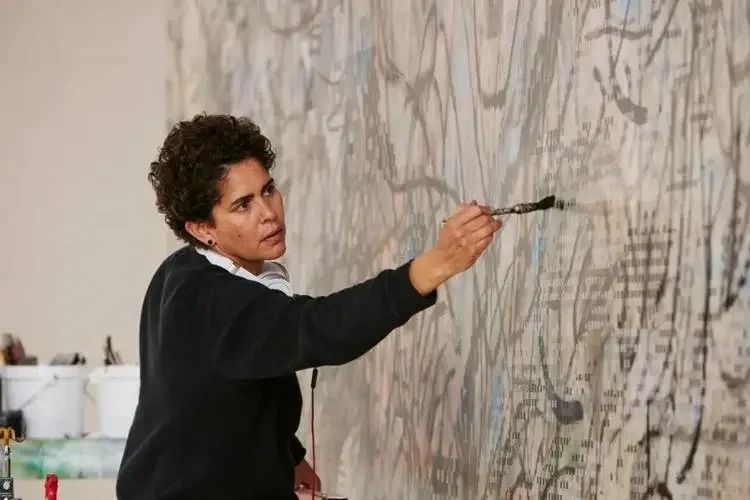
Working primarily in large-scale painting, Julie Mehretu constructs dense visual fields that merge architectural diagrams, gestural marks, and historical references. Her compositions visualize movement, conflict, and spatial compression, reflecting the visual complexity of contemporary urban life. Her work is held by The Museum of Modern Art, where it has become a key reference point for contemporary abstraction.
Mehretu demonstrates how abstraction can operate as a spatial and geopolitical language.
Mark Bradford integrates painting, collage, and found materials drawn from urban environments. His abstract surfaces address systems of power, labor, and marginalization without resorting to figuration. His representation in Tate Modern confirms his position as a leading figure in socially grounded abstraction.
Bradford expands abstract art through material realism and civic engagement.
The paintings of Charline von Heyl resist stylistic stability, combining historical references with abrupt chromatic and compositional shifts. Her work positions abstraction as an active perceptual challenge rather than a fixed visual system. She is represented in the permanent collection of Centre Pompidou.
Von Heyl reinforces abstraction as a thinking-based, perceptual practice.
Known for her consistent format and disciplined process, Tomma Abts produces abstract paintings governed by internal logic rather than external reference. Her work is included in the collection of Tate Britain, underscoring the long-term relevance of sustained formal inquiry.
Abts exemplifies continuity and rigor within contemporary abstraction.
Eva Rothschild works primarily in sculpture, drawing from constructivism and minimalism while introducing organic tension and spatial ambiguity. Her installations, shown at Whitechapel Gallery, demonstrate how abstract principles extend beyond painting into bodily experience.
Rothschild extends abstract thinking into three-dimensional perception.
Blending modernist abstraction with African visual traditions, Odili Donald Odita produces vibrant compositions that challenge Western-centric narratives. His work appears in the collection of The Studio Museum in Harlem, reinforcing abstraction’s role in global cultural dialogue.
Odita repositions abstraction within global and diasporic frameworks.
Many articles on famous 21st century artists rely on static lists that underplay medium diversity and cultural complexity. Such approaches often prioritize painting while marginalizing installation, sculpture, and cross-disciplinary practices. They also tend to frame abstraction as stylistic rather than conceptual.
By expanding evaluation beyond medium and market, a more accurate picture of contemporary abstract art emerges. Abstract artists today operate within global systems of circulation, where influence is distributed rather than centralized. This reality challenges the notion of definitive rankings.
A multi-perspective approach reveals abstraction as an evolving ecosystem.
Popular abstract art does not imply simplification or dilution. Instead, it reflects accessibility through scale, placement, and emotional resonance. Public murals, architectural interventions, and digital platforms allow abstraction to reach broader audiences without abandoning complexity.
Museums and international exhibitions have played a key role in integrating abstraction into public consciousness. This visibility reshapes how abstract art functions socially, not merely aesthetically.
Popularity in abstraction signals expanded relevance, not reduced rigor.
Abstract art in the 21st century resists closure. New technologies, ecological concerns, and shifting geopolitical realities continue to inform abstract strategies. Artists increasingly treat abstraction as a method rather than an endpoint, allowing it to adapt to new contexts.
This adaptability explains why abstraction remains central despite repeated claims of exhaustion. Its openness enables continuous reinvention.
Abstraction persists because it remains structurally elastic.
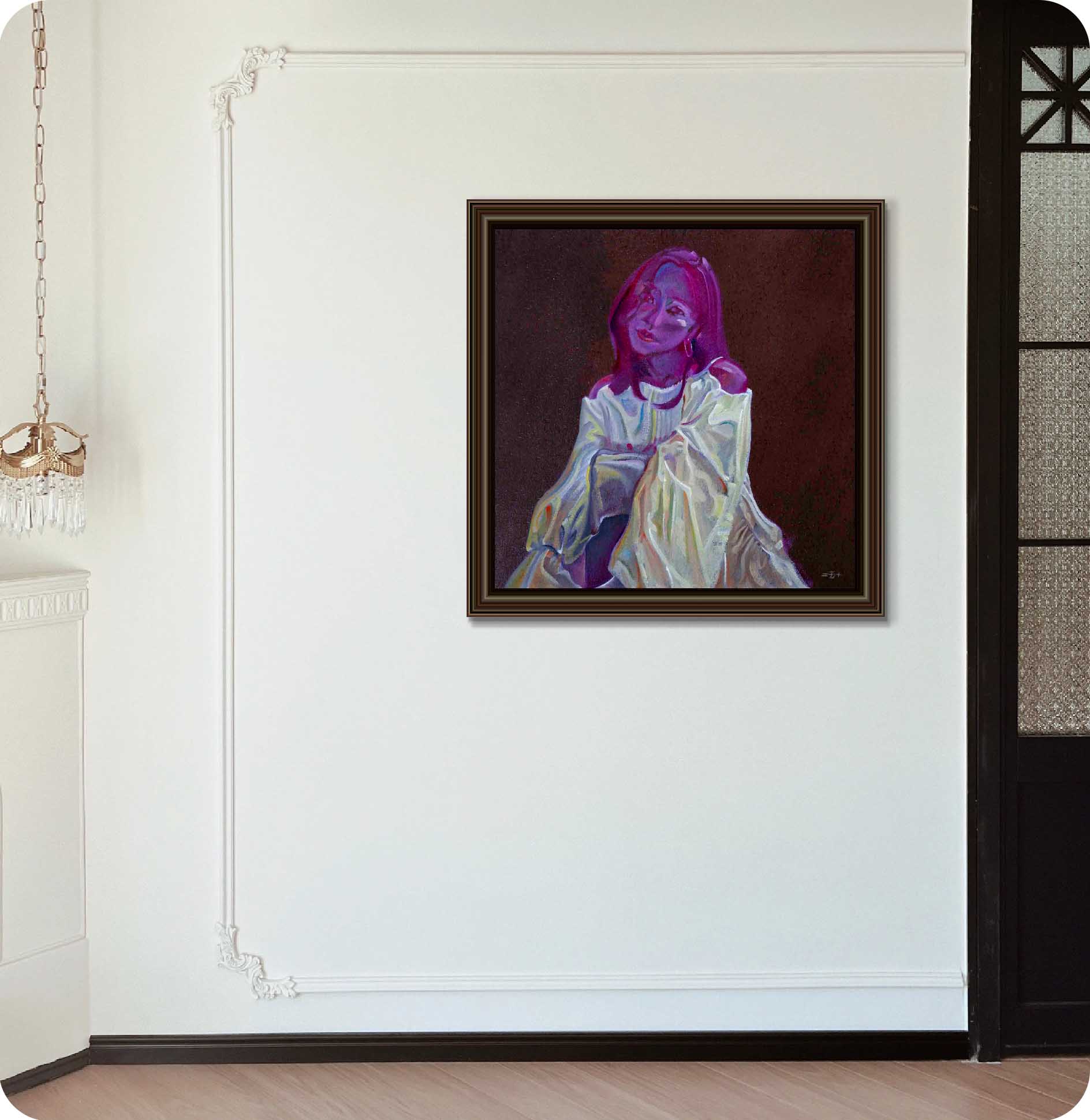
For readers interested in how contemporary abstraction continues to evolve beyond institutional narratives, artphiloso offers a focused perspective on abstract practices grounded in formal clarity and conceptual rigor. The works presented on artphiloso.com explore abstraction as a language shaped by rhythm, spatial balance, and restrained visual systems, aligning with the broader trajectories discussed in this article. Within the context of today’s abstract artists, the platform provides a thoughtful extension of how abstraction can remain both disciplined and open-ended in the 21st century.
Hi, I’m Philo, a Chinese artist passionate about blending traditional Asian art with contemporary expressions. Through Artphiloso, my artist website, I share my journey and creations—from figurative painting and figure painting to floral oil painting and painting on landscape. You'll also find ideas for home decorating with paint and more.