Understanding what does proportion mean in art requires more than a reference to the Golden Ratio. Proportion shapes how viewers perceive harmony, authority, realism, distortion, and structure. It connects mathematics to perception, biology to architecture, and tradition to contemporary experimentation.
Many introductory discussions define proportion narrowly as size relationships within a composition. That definition is accurate but incomplete. A fuller explanation includes historical systems, cultural variation, perceptual research, and modern artistic strategies that deliberately challenge proportional norms.
Proportion in art functions as a structural principle that organizes visual meaning across historical and cultural contexts.
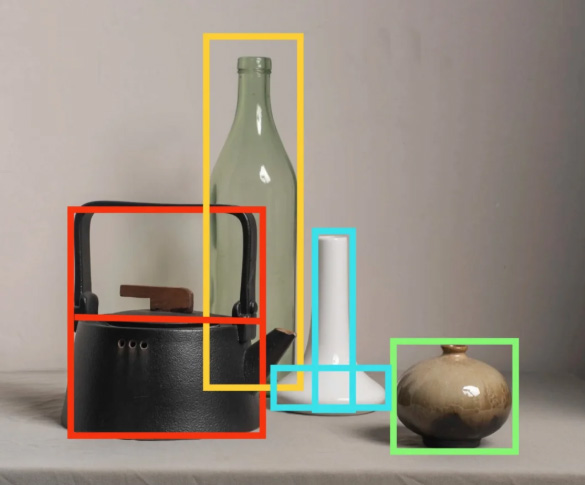
In visual art, proportion refers to the relative size relationships between parts of a whole. The proportions meaning in this context concerns how one element compares to another within the same composition.
The standard art definition for proportion can be expressed as:
The relationship of sizes, quantities, or dimensions between components in a visual work.
It is important to distinguish proportion from scale. Scale addresses the size of an object relative to the viewer or to real-world measurement. Proportion concerns internal relationships within the artwork itself.
If a figure’s head is enlarged relative to its torso, the meaning shifts even when the sculpture remains life-sized.
Proportion regulates internal coherence, while scale regulates external reference.
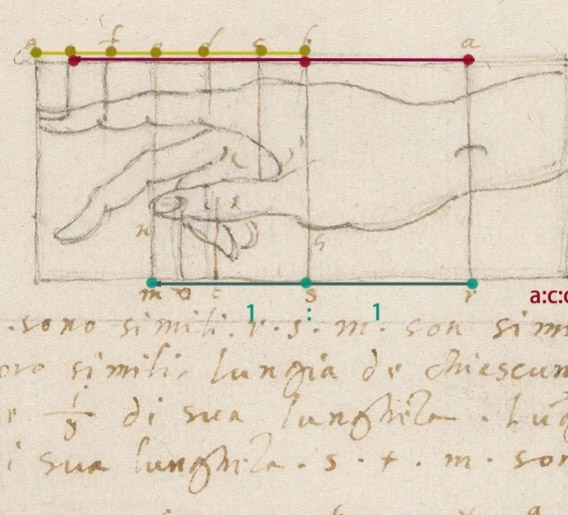
Classical antiquity established early systematic approaches to proportion. The canon attributed to Polykleitos proposed mathematical ratios intended to represent ideal bodily structure. During the Renaissance, artists such as Leonardo da Vinci refined anatomical systems through measured observation and geometry.
The Golden Ratio, approximately 1:1.618, is frequently cited as a universal aesthetic formula. Its historical application, however, has often been overstated. Many celebrated works do not strictly follow this ratio, and empirical research does not confirm it as a biologically preferred standard.
Renaissance proportion systems reflected philosophical commitments to order and rational clarity rather than a fixed universal formula.
Classical proportion theories expressed intellectual ideals of order more than mechanical mathematical rules.
European traditions do not represent a global norm. Proportion varies significantly across cultures and symbolic systems.
Ancient Egyptian wall paintings used hierarchical proportion, enlarging rulers relative to attendants to communicate authority rather than anatomical realism. Medieval European manuscripts frequently magnified sacred figures to emphasize spiritual significance. In several African sculptural traditions, enlarged heads signify intellectual and spiritual presence.
These variations demonstrate that what is proportionate depends on cultural logic rather than anatomical measurement alone.
Proportional systems encode cultural hierarchy, belief, and symbolic emphasis.
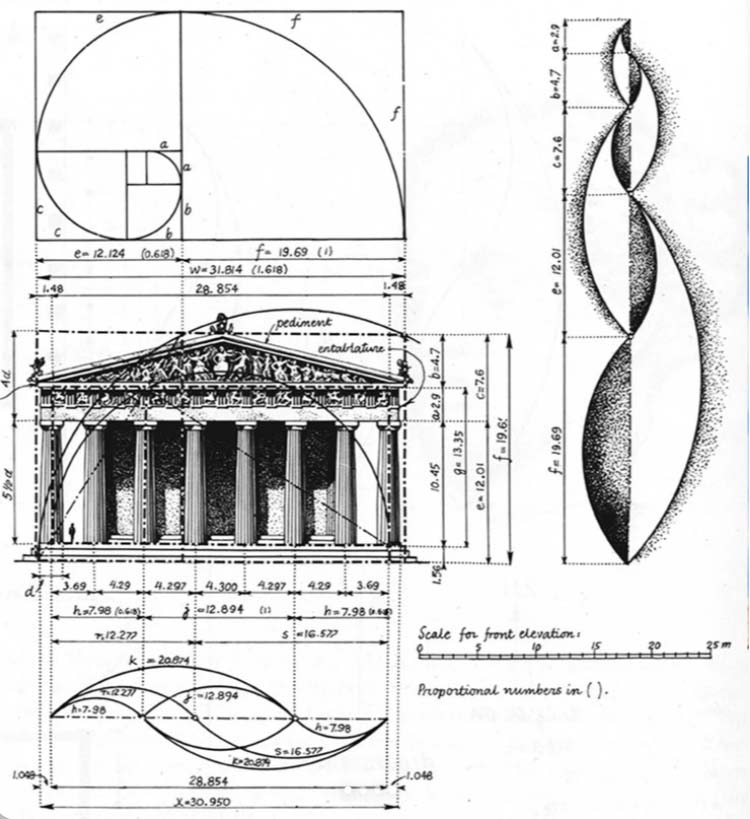
Architecture illustrates proportion as both structural necessity and political language. Classical temples relied on measured column spacing and façade alignment to achieve visual stability. Renaissance architects revived these ratios to align built space with humanist philosophy.
In the twentieth century, monumental state architecture exaggerated proportion to assert ideological authority. Oversized spatial frameworks altered bodily perception, positioning individuals as minor within the constructed environment.
Modernist architecture later adopted modular grids that emphasized efficiency and rational clarity over symbolic hierarchy.
Architectural proportion shapes psychological response as much as structural balance.
Proportion intersects with perceptual psychology. Human visual processing rapidly evaluates size relationships to interpret depth, bodily coherence, and spatial orientation.
Research indicates that sensitivity to proportion is context-dependent rather than tied to a single universal ratio. Familiarity, expectation, and cultural exposure influence judgments of balance.
Artists use this perceptual sensitivity strategically. Minor distortions can create tension. Balanced relationships can create calm. Strong disproportions can create instability.
Perception of proportion arises from contextual interpretation rather than innate attachment to one formula.
Modern art transformed proportion from rule to expressive device. Cubism fragmented spatial relationships to challenge stable representation. Surrealism altered bodily scale to destabilize ordinary perception. Expressionist painters exaggerated anatomical features to intensify psychological force.
In contemporary practice, disproportion often critiques media imagery, consumer spectacle, or institutional authority. Enlarged objects, compressed environments, and manipulated digital scale create conceptual friction.
In this context, what is proportionate depends on internal logic rather than anatomical fidelity.
Contemporary art redefines proportion as a conceptual instrument rather than a fixed standard of harmony.
Beyond fine art, proportion governs graphic systems, typography, product design, and digital interfaces. Grid frameworks regulate spacing. Typographic hierarchy controls emphasis. Interface proportions guide usability.
The ratio between text and negative space determines readability. Image placement relative to layout defines visual weight.
Contemporary design proportion is driven by clarity, accessibility, and functional logic rather than metaphysical symmetry.
In design, proportion supports clarity, legibility, and functional structure.
Introductory discussions often reduce proportion to three ideas: the Golden Ratio, anatomical realism, and visual balance. This framework overlooks:
A comprehensive understanding integrates historical theory, cultural variation, scientific insight, and contemporary experimentation.
A rigorous definition of proportion requires interdisciplinary awareness rather than reliance on a single historical model.
Hi, I’m Philo, a Chinese artist passionate about blending traditional Asian art with contemporary expressions. Through Artphiloso, my artist website, I share my journey and creations—from figurative painting and figure painting to floral oil painting and painting on landscape. You'll also find ideas for home decorating with paint and more.
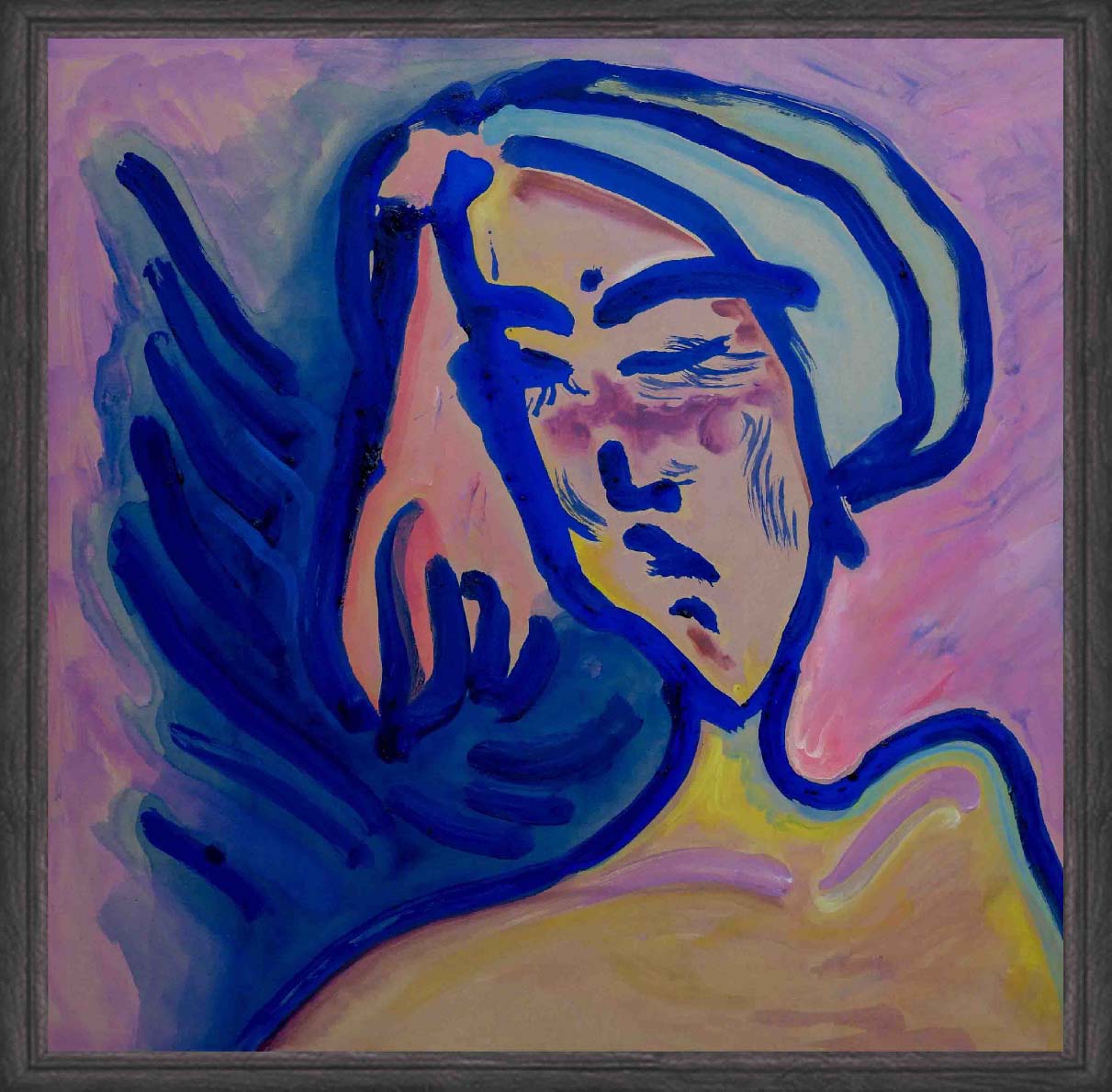
For readers interested in observing proportion as a structural principle rather than a theoretical abstraction, artphiloso.com presents works that examine internal balance, spatial hierarchy, and controlled distortion. The compositions demonstrate how proportion guides perception, directs visual movement, and organizes conceptual emphasis within contemporary visual language.
It refers to the internal size relationships between elements within a composition.
It is the comparative relationship of dimensions among parts of a visual work.
An artwork is proportionate when its internal relationships remain coherent within its intended structural logic.
No. Symmetry refers to mirrored balance, while proportion concerns comparative size relationships, whether balanced or intentionally uneven.
Distortion intensifies expression, challenges realism, and shifts conceptual meaning within the visual structure.